
In this guide we explain what Energy Performance Certificate (EPC) ratings mean, how they are calculated and why they matter.
We also outline which improvements have the biggest impact on energy efficiency and house prices.
Key takeaways: Energy Performance Certificate (EPC) ratings
- EPCs rate a property’s energy efficiency from A (most efficient, with lowest running costs) to G (least efficient, with highest running costs). Certificates are valid for 10 years and are required for selling or renting property.
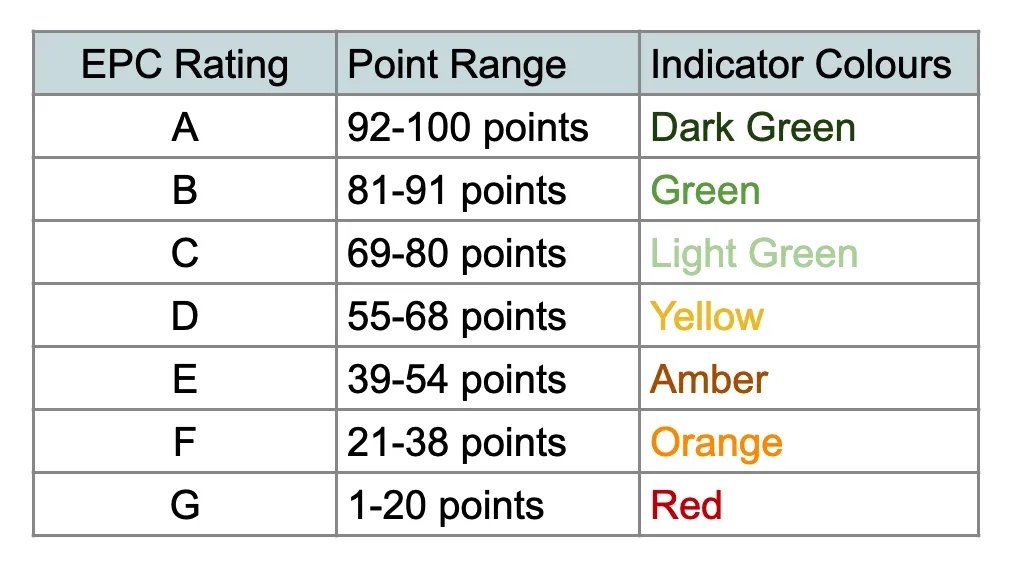
- EPC ratings correspond to SAP scores with A (92-100) to G (1-20). The government is aiming to raise minimum rental EPC standards from E to C by 2028 for new tenancies.
- A qualified assessor collects detailed property data on insulation, heating, lighting and ventilation to calculate SAP scores, using the updated RdSAP 10 method (since June 2025).
- Property value tends to increase most with window upgrades, significant heating system improvements and to a lesser extent, wall or loft insulation and lighting upgrades.
- Common improvement measures to boost EPC ratings include upgrading to double or triple glazing, installing efficient boilers or heat pumps, insulating hot water systems and roofs, adding wall insulation, installing solar panels and switching to LED lighting for energy savings.
EPC rating meaning
An EPC rating is the letter grade (A-G) on an Energy Performance Certificate that shows how energy efficient a property is and how costly it is likely to be to heat and power.
It rates a property from A – the most efficient, with the lowest running costs – down to G – the least efficient, with the highest running costs.
EPCs provide an estimate of the energy costs for a property and how much you could save by carrying out its recommended measures.
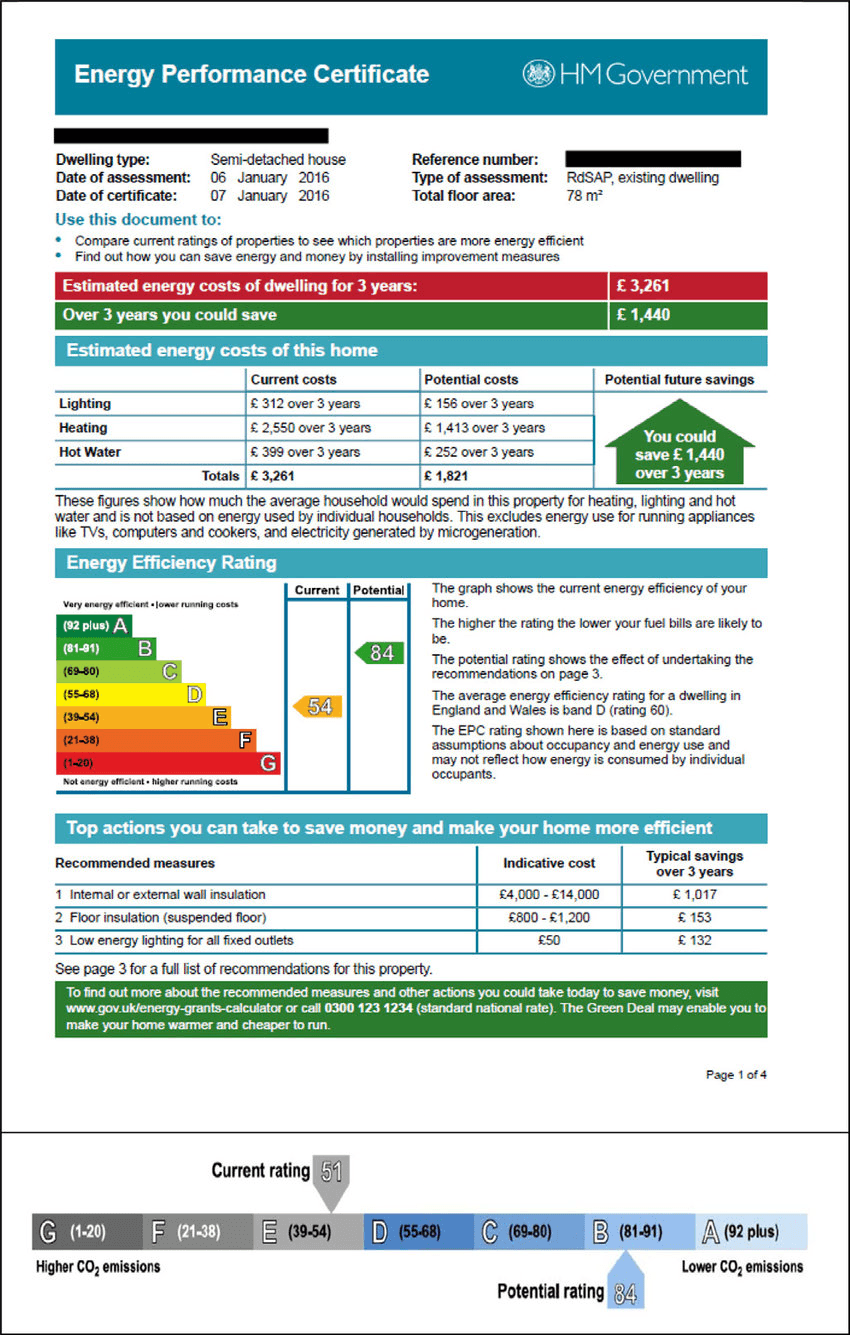
Alongside the current EPC rating, the certificate also provides a potential EPC rating which is an estimate of what the rating could be if all proposed measures are undertaken.
Fig. 01 Shows an example Energy Performance Certificate.
Certificate contents
The certificate’s main contents include:
| Energy efficiency rating and score |
| Property address |
| Certificate or reference number |
| Property type (e.g. top-floor flat) |
| Dates of assessment and certificate |
| Total floor area |
| Estimated energy costs for lighting, heating and hot water |
| Potential cost savings through recommended measures |
| Recommended actions to save money and improve efficiency |
| Summary of the property’s energy performance related features |
You can find online versions of the certificates for individual properties through the government’s ‘find an energy certificate’ feature.
To get a new energy certificate, you need to arrange a property assessment.
What are the different EPC ratings?
EPC ratings range from G (least efficient) to A (most efficient) and each rating corresponds to a range of SAP scores.
See the table at Fig. 02
For properties in England and Wales, the average EPC rating is D and the average energy score is 60.
Since 2020, regulations governing the renting of property require rental properties to have a rating higher than E.
However, the government has proposed increasing the minimum EPC requirement for rental properties from E to C as part of its Warm Homes Plan. This would apply to new tenancies from 2028 and current tenancies from 2030.
EPC certificates last for 10 years. When the certificate expires, you must get a new one before selling or renting out the property again.
If you improve the property's energy efficiency significantly before the 10 years end, it’s a good idea to get a new EPC early.
How are the scores calculated?
A qualified energy assessor visits the property to collect detailed information on the property’s energy efficiency. This includes assessing the insulation, heating, ventilation, windows, lighting and hot water systems.
The assessor inputs data about construction materials, heating types, fuel sources, glazing, ventilation and lighting into a model called the Standard Assessment Procedure (SAP). This calculates the predicted energy use for space heating, water heating, lighting and ventilation.
This calculated energy usage is converted into a SAP score, ranging from 1 to 100+, which is then mapped to the EPC bands from A to G.
The method also calculates the estimated CO2 emissions, which form the basis of the environmental impact rating shown on the EPC.
Based on the data, the assessor identifies potential cost-effective energy efficiency improvements with estimated costs and savings.
The Ministry introduced the latest version of its Reduced data Standard Assessment Procedure to produce EPCs, called RdSAP 10, on 15 June 2025.
Key changes include new data inputs, revised assumptions for more accurate ratings and improved recommendations for energy improvements.
Why do EPCs matter?
EPCs are a legal requirement to ensure rental properties meet minimum standards and that buyers of properties always have the energy efficiency information they need.
- EPCs are a legal requirement before selling or letting a property, ensuring compliance with UK regulations.
- A better EPC rating means the property is more energy efficient and cheaper to run.
- Better energy efficiency contributes to reducing the property's carbon footprint.
- EPCs provide essential information on a property's energy consumption and suggest improvements for owners planning upgrades.
- Improving energy efficiency based on EPC recommendations can increase the property's market value and attract buyers or tenants.
But as we explored in How Much Value is Added to Your Home When Making It More Energy Efficient?, it is not straightforward to measure the financial effect of improving energy performance on a property.
How do EPCs affect house prices?
To analyse the impact of energy efficiency improvements we looked at properties which have sold more than once and where the EPC rating changed substantially between those sales. We then compared the difference in achieved sales prices with the expected changes from the general market movements.
The full analysis is available in Energy Performance Improvements that Add the Most Value.
In summary:
- Upgrading windows tends to add the most value including installation or improvement of double glazing, consistently adding around a 2% increase in property value.
- For hot water and heating systems, major upgrades can lead to a big increase in property value, especially for lower-value properties under £250,000, but minor improvements have little effect.
- Wall and loft insulation adds some value but tends to contribute less to price gains compared to windows or heating, partly because these upgrades are less visually noticeable.
- Installing low-energy fittings adds the least value, given its generally lower cost and impact.
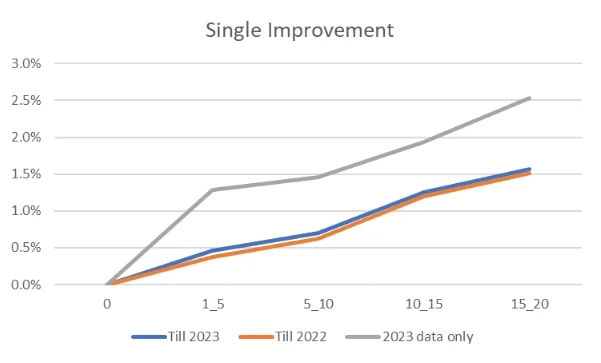
Further analysis suggests that energy efficiency is growing in importance as a factor helping to determine property values. The Impact of Energy Efficiency Improvements on Property Values Doubled in 2023 compared to previous years.
Fig. 02 shows a stronger trend of energy efficiency improvements contributing to property value increases in 2023 compared to the previous period.
How to improve EPC ratings
Every property is different, so the most effective way to improve an EPC rating will vary on a case-by-case basis.
Factors such as the property’s age, construction type, current condition and existing systems all influence which upgrades will deliver the greatest impact.
There are many potential solutions available for each energy efficiency issue, from insulation to heating systems and lighting, to suit individual property needs and budgets.
A professional assessment can help identify the best specific improvements for your property to maximise energy efficiency gains and cost-effectiveness. We have included some of the most common solutions below.
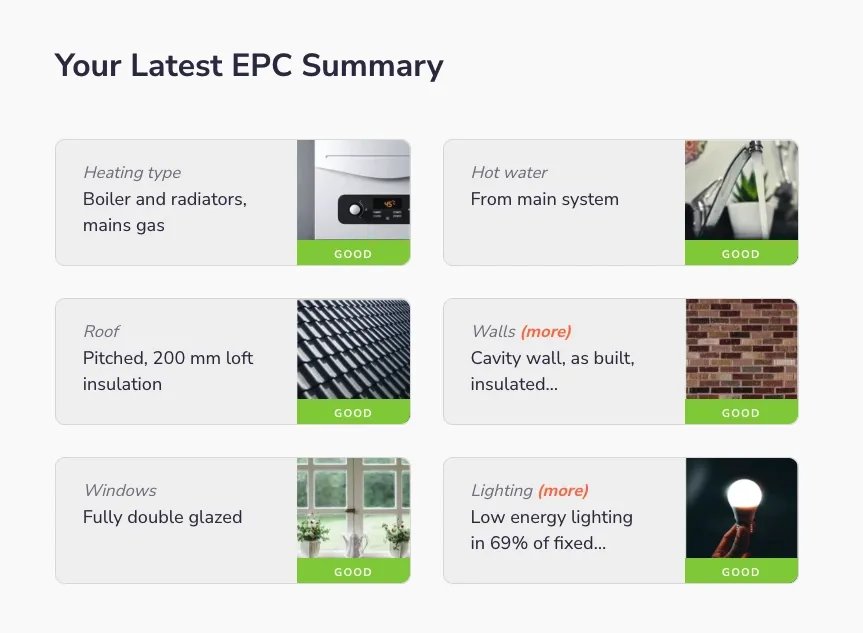
Fig. 03 shows the report on a C-rated property in Bricks&Logic.
Some Common Energy Improvements
Windows:
- Upgrade from single glazing to double or triple glazing.
- Ensure windows are well sealed and draught-proofed to prevent heat loss around frames.
Heating Type:
- Replace outdated boilers with modern, highly efficient condensing boilers rated A or higher.
- Consider renewable heating systems such as air source or ground source heat pumps.
- Implement smart heating controls, programmable thermostats or thermostatic radiator valves to optimise heating use and reduce waste.
Hot Water:
- Insulate hot water tanks and pipes to reduce heat loss.
- Optimise hot water heating systems with dual immersion heaters, connected to off-peak electricity tariffs if using electric heating.
- Consider solar thermal systems to supplement hot water heating, reducing energy consumption.
Roof:
- Install or upgrade loft insulation to at least 270mm thickness using materials such as fiberglass, mineral wool, or sheep’s wool.
- Consider installing solar panels to generate electricity from sunlight, reducing your energy bills. Flat roofs are often ideal for solar panel installation due to their ability to be positioned for maximum sun exposure.
Walls:
- Add internal or external wall insulation to reduce heat loss.
Lighting:
- Replace incandescent, halogen or older fluorescent lighting with LED bulbs, which use significantly less energy and last longer.
- Use low energy lighting (LEL), with a preference for LED lights to improve energy efficiency quickly and cost-effectively.
This information is provided for general informational purposes only and does not constitute legal, financial or professional advice. The authors and publisher accept no responsibility or liability for any losses incurred from energy efficiency improvement decisions based on the information provided. It is advisable to seek professional advice tailored to your specific situation. Use this information at your own risk.
Final thoughts: Proposed changes to EPC metrics
The government is proposing to set higher minimum energy efficiency standards (MEES) against new metrics, following a potential reform to EPCs in 2026.
The planned new metrics would assess the energy performance of buildings based on fabric performance, smart readiness and the efficiency of the heating system.
For more details on the government’s plans, a summary of the consultation is available – Improving the energy performance of privately rented homes.
But for now, the current EPC framework remains the key tool for property owners to understand and improve energy performance.
We have turned our analysis on the impact of energy efficiency improvements on property prices into a practical model for estate agents. Our energy efficiency report application generates reports for their clients about the potential value and cost savings of energy efficiency improvements in their properties.
If you have any questions for us, please don’t hesitate to get in touch by clicking the email icon below.


